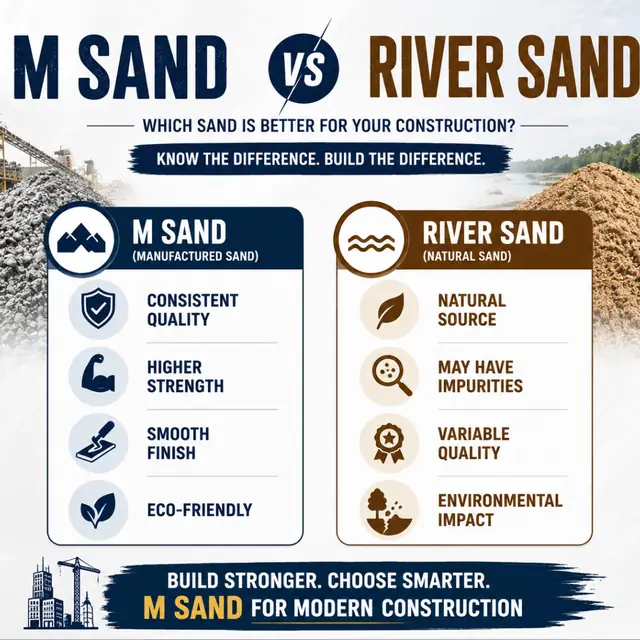
M-Sand vs River Sand Choosing the Right Sand for Your Construction Project
Choosing the right sand is an important decision in any construction project. Sand is widely used for concrete, mortar, plastering, and other construction activities. Traditionally, river sand has been the preferred choice, but M-Sand (Manufactured Sand) has become a popular alternative because of increasing demand, environmental concerns, and limited availability of natural sand.
What is River Sand?
River sand is naturally obtained from riverbeds and riverbanks. It is formed naturally through the weathering and erosion of rocks over a long period.
Advantages of River Sand
- • Naturally rounded and smooth particles
- • Generally good workability
- • Suitable for masonry and plastering when properly graded
- • Traditionally familiar to masons and contractors
Disadvantages of River Sand
- • Natural deposits are limited.
- • Excessive river sand mining can damage river ecosystems
- • Quality and grading can vary depending on the source
- • Transportation can increase the overall cost
What is M-Sand?
M-Sand, or Manufactured Sand, is produced by crushing and processing hard rock in controlled manufacturing plants. It is specifically manufactured to achieve suitable particle size and grading for construction applications.
Advantages of M-Sand
- • Manufactured under controlled conditions
- • Consistent grading when produced to the required standard
- • Reduced dependence on natural river sand
- • Can be available closer to construction sites depending on local production
- • Suitable for concrete and mortar when properly manufactured and tested
Disadvantages of M-Sand
- • Quality varies between manufacturers
- • Poorly manufactured M-Sand can contain excessive fines or unwanted particles
- • May require adjustments in mix design and water demand
- • Proper quality testing is important before use
Which Is Better for Construction?
There is no single answer for every application. The better choice depends on the type of construction, required finish, material quality, and project specifications.For concrete and structural work, good-quality M-Sand can be an excellent choice when it meets the applicable specifications and is properly tested.
For plastering and finishing work, the sand should be selected based on grading, cleanliness, workability, and the required surface finish. Properly manufactured and graded M-Sand can also be used for these applications.The most important factor is not simply whether the sand is M-Sand or river sand — it is whether the material meets the required quality standards for its intended use.
How to Choose the Right Sand?
- Check the quality — Make sure the sand is clean and free from harmful impurities, clay, organic matter, and excessive unwanted fines.
- Check the grading — Proper particle-size distribution is essential for good concrete and mortar performance.
- Consider the application — Sand required for concrete may have different requirements from sand used for plastering or masonry.
- Buy from a reliable supplier — A trusted supplier can provide more consistent material quality.
- Test before large-scale use — For important construction work, laboratory testing should be carried out according to the applicable project specifications and standards.
Conclusion
M-Sand is a strong and practical alternative to river sand for modern construction, particularly where good-quality, properly manufactured material is available. It can provide consistent grading and reduce dependence on natural river sand.
However, quality matters more than simply choosing M-Sand or river sand. The right material should be selected based on its intended application, grading, cleanliness, test results, and project requirements.